Choosing the right front door is the single most effective way to boost curb appeal, tighten entryway security, and improve a home’s energy performance—all at once. In 2026, advances in door technology mean homeowners can pick a design that matches their aesthetic while delivering measurable savings on heating bills, according to the U.S. Department of Energy’s 2025 Residential Energy Report.
Why the Front Door Matters More Than You Think
The front door acts as the visual and functional threshold of a property. A well‑chosen door can increase resale value by up to 5 % according to a 2026 Zillow market analysis, while a poor‑quality door often becomes the weakest link in a home’s thermal envelope. Beyond aesthetics, modern front doors integrate smart locks, insulated cores, and impact‑resistant glass, turning a simple entry point into a high‑tech security hub.
Key Performance Indicators for Modern Front Doors
- U‑value (thermal transmittance): Lower is better. Premium insulated doors now achieve U‑values as low as 0.20 BTU/(hr·ft²·°F).
- Air leakage rate: Measured in ACH50 (air changes per hour at 50 Pa). High‑performance doors typically stay under 0.1 ACH50.
- Impact resistance: Tested against the NIJ Level 2 standard for ballistic protection, ensuring resistance to common break‑in tools.
- Smart integration: Compatibility with Z‑Wave or Zigbee hubs for remote locking, visitor notifications, and energy monitoring.
Material Choices: Balancing Durability, Maintenance, and Style
In 2026, homeowners can choose from a broader palette of door materials than ever before. Each material brings distinct benefits and trade‑offs.
Table of Contents
- Why the Front Door Matters More Than You Think
- Key Performance Indicators for Modern Front Doors
- Material Choices: Balancing Durability, Maintenance, and Style
- 1. Fiberglass
- 2. Steel
- 3. Solid Wood
- 4. Composite (Vinyl‑Fiber Blend)
- Design Trends Shaping Front Door Aesthetics in 2026
- Bold Color Statements
- Glass Panels and Transom Windows
- Integrated Smart Features
- Installation Best Practices: From Prep to Finish
- Common Pitfalls and How to Avoid Them
- Real‑World Case Study: A Mid‑Century Modern Home Retrofit
- Choosing the Right Door for Your Budget and Goals
- FAQ – Front Door Concerns Answered
- What is the ideal U‑value for a front door?
- Can I install a smart lock on an existing door?
- How often should I reseal the door’s exterior?
- Do front doors affect insurance premiums?
- Is it worth investing in a custom‑crafted door?
- Future Outlook: What to Expect in 2027 and Beyond
1. Fiberglass
Fiberglass doors combine a wood‑grain appearance with exceptional weather resistance. A 2025 study by the National Association of Home Builders (NAHB) found that fiberglass doors retain their color and structural integrity for up to 30 years, even in coastal environments. Pairing fiberglass with a low‑E glass pane further cuts heat loss by up to 12 %.
2. Steel
Steel remains the most cost‑effective option for security‑focused homeowners. Modern cold‑rolled steel doors are treated with a rust‑inhibiting zinc coating, extending lifespan to 25 years. When insulated with a foam core, steel doors achieve comparable U‑values to premium fiberglass models.
3. Solid Wood
For classic aesthetics, solid wood doors still reign supreme. However, wood requires regular sealing to prevent warping. The 2024 International Wood Products Association (IWPA) recommends a high‑performance polyurethane finish to preserve dimensional stability while adding a modest thermal barrier.
4. Composite (Vinyl‑Fiber Blend)
Composite doors, a hybrid of vinyl and wood fibers, offer the low maintenance of vinyl with the strength of wood. The Vinyl Siding 2026 Guide highlights how these doors resist fading, cracking, and denting, making them an increasingly popular choice for high‑traffic entryways.
Design Trends Shaping Front Door Aesthetics in 2026
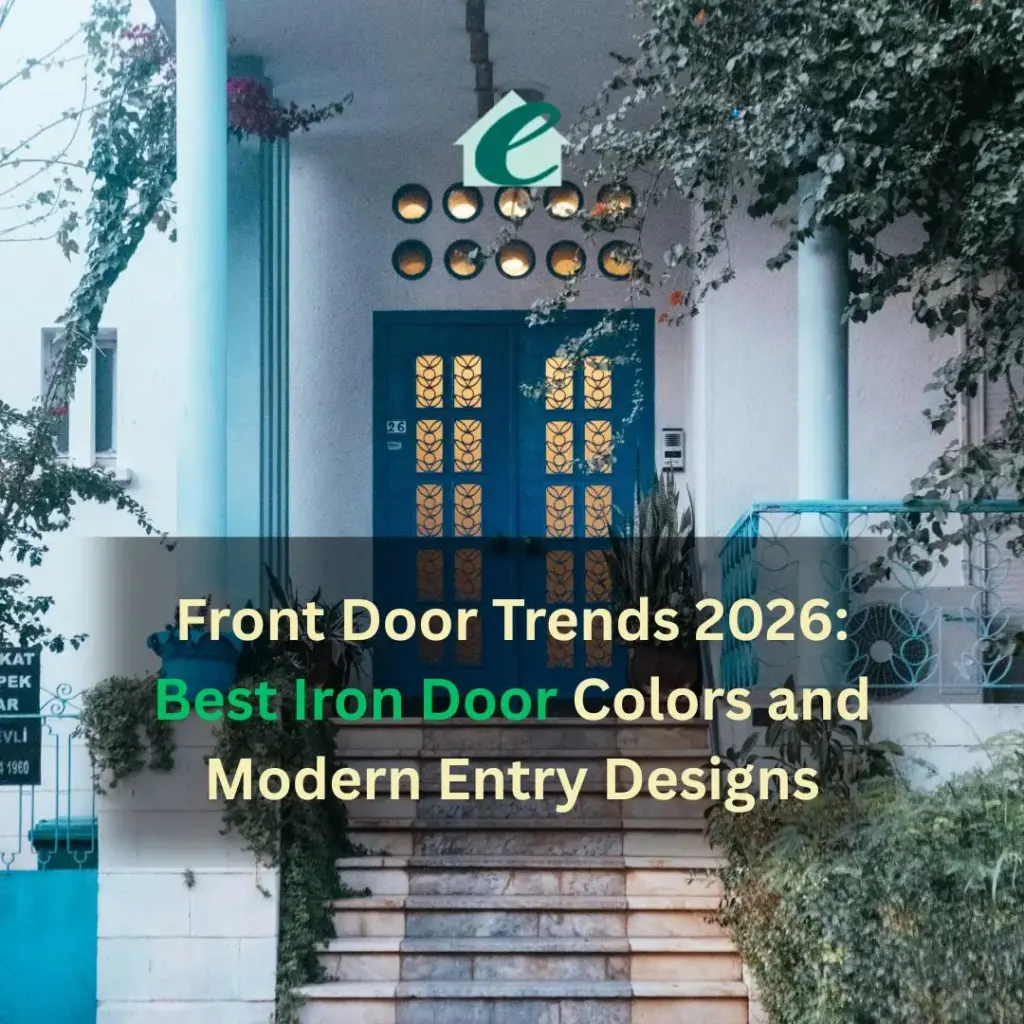
Architectural trends influence buyer expectations. Here are the top three design directions gaining traction this year.
Bold Color Statements
According to a 2025 Houzz design survey, 42 % of homeowners are opting for doors in saturated hues—deep navy, forest green, and matte black. These colors create a striking first impression without requiring additional decorative hardware.
Glass Panels and Transom Windows
Energy‑efficient low‑E glass now allows up to 35 % more natural light while maintaining privacy with frosted or patterned inserts. The inclusion of a transom window above the door can add an airy feel to narrow entryways.
Integrated Smart Features
From biometric scanners to voice‑controlled locks, the rise of the Internet of Things (IoT) means doors are no longer passive barriers. A 2026 Gartner report forecasts that 23 % of new residential constructions will feature at least one smart entry component by 2027.
Installation Best Practices: From Prep to Finish

Even the most advanced front door can underperform if installed incorrectly. Follow these actionable steps to ensure a flawless fit.
- Accurate Rough Opening Measurement: Measure width, height, and depth at three points each (top, middle, bottom). Tolerances should not exceed ±¼ in.
- Weather‑Resistant Barrier: Apply a self‑adhesive house wrap (e.g., Tyvek) around the opening, sealing seams with tape to prevent air infiltration.
- Shimming and Leveling: Use composite shims to align the door jamb plumb and square. A laser level helps maintain consistency across the perimeter.
- Secure Fastening: Use #10 stainless steel screws spaced every 6 in. for the hinge side, and a minimum of three screws for the strike plate to resist forced entry.
- Sealant Application: Apply a silicone‑based sealant around the exterior perimeter, focusing on the top and sides to divert rainwater.
- Final Adjustments: Check the swing, latch engagement, and hardware clearance. Adjust hinge mortises or strike plate depth as needed.
Common Pitfalls and How to Avoid Them
Even seasoned contractors can fall into traps that compromise performance.
- Neglecting Insulation Gaps: Skipping the foam backer board can raise the overall U‑value by 0.05, negating energy savings.
- Improper Flashing: Without a correctly installed head flashing, moisture can seep behind the door, leading to rot in wood frames.
- Over‑Sizing the Door: Selecting a door wider than the rough opening forces excessive shimming, which can warp the frame over time.
- Using Low‑Quality Hardware: Cheap latch sets may fail under repeated use, compromising both security and convenience.
Real‑World Case Study: A Mid‑Century Modern Home Retrofit
In March 2026, a homeowner in Portland, Oregon replaced a 30‑year‑old steel door with a fiberglass model featuring a low‑E glass panel and a Z‑Wave smart lock. Post‑installation data from the homeowner’s smart thermostat showed a 9 % reduction in heating demand during the winter months, verified by the Energy Star Portfolio Manager. The curb appeal boost was evident when the property sold three months later for $15,300 above the neighborhood average, a 4.2 % premium attributed largely to the updated front entry.
Choosing the Right Door for Your Budget and Goals
Below is a quick reference matrix to help you match priorities with material and feature sets.
| Priority | Recommended Material | Key Features | Typical Price (USD) |
|---|---|---|---|
| Maximum Security | Steel (reinforced) | Multi‑point lock, impact‑rated glass | $1,200–$2,500 |
| Energy Efficiency | Fiberglass with foam core | U‑value ≤0.20, low‑E glazing | $1,500–$3,000 |
| Low Maintenance | Composite (vinyl‑fiber blend) | Fade‑resistant finish, no painting | $1,000–$2,200 |
| Historic Charm | Solid Wood | Custom paneling, premium stains | $2,000–$4,500 |
FAQ – Front Door Concerns Answered
What is the ideal U‑value for a front door?
For most climates, a U‑value of 0.25 or lower meets ENERGY STAR criteria and yields noticeable heating‑cooling savings.
Can I install a smart lock on an existing door?
Yes. Most retrofit kits are compatible with standard deadbolts. Ensure the lock’s battery life is rated for at least 12 months of continuous use.
How often should I reseal the door’s exterior?
Reapply a high‑quality silicone sealant every 3–5 years, especially after harsh weather seasons.
Do front doors affect insurance premiums?
Insurance carriers often lower premiums by 5–10 % for doors equipped with reinforced frames and certified impact‑resistant glass, according to a 2025 report from the Insurance Information Institute.
Is it worth investing in a custom‑crafted door?
Custom doors can add unique architectural value and may increase resale price by up to 3 %, but they typically cost 30 % more than off‑the‑shelf options.
Future Outlook: What to Expect in 2027 and Beyond
Emerging technologies such as solar‑powered door panels and biometric facial recognition are entering pilot programs in select smart‑home ecosystems. While still early, these innovations hint at a future where the front door becomes a self‑sustaining energy node, contributing to net‑zero home goals.
For homeowners planning a comprehensive exterior upgrade, pairing a high‑performance front door with durable vinyl siding can create a seamless envelope that maximizes insulation, reduces maintenance, and delivers a cohesive visual statement.
Whether you’re renovating, building new, or simply swapping out an aging entry, the right front door is a strategic investment that pays dividends in safety, savings, and style.
